Cindyvivo publishes general information for UK readers. It is not personal financial advice, a recommendation of any account, or an instruction to save or spend a particular sum. We are not authorised by the Financial Conduct Authority. Check current rules on GOV.UK and the Financial Services Compensation Scheme before you move money.
Three questions, in order
1. Is it necessary?
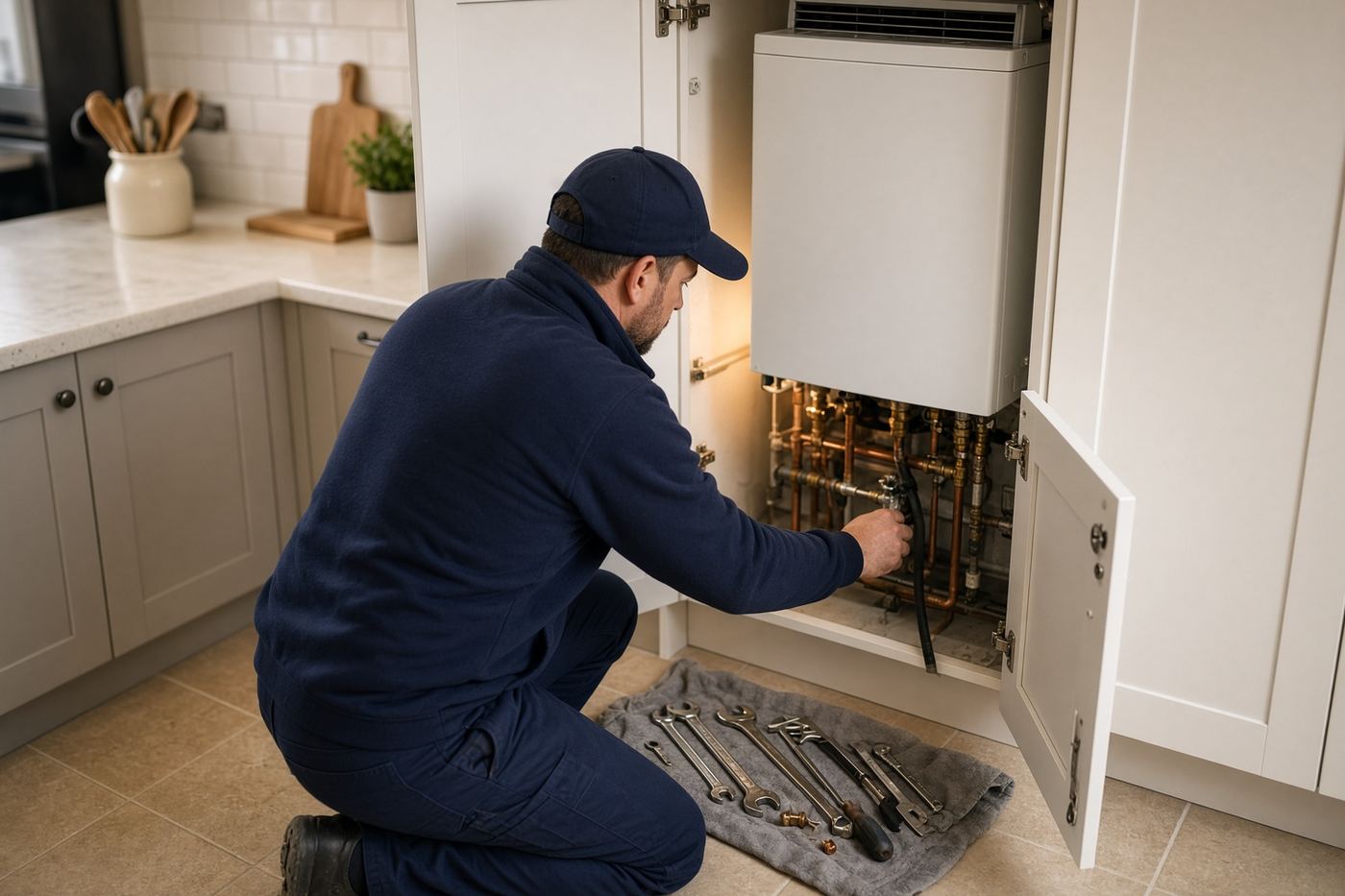
Would a reasonable version of your household be unsafe, unable to work, or in breach of a tenancy or mortgage if you did not pay? A boiler in November can be necessary. A newer phone, when the old one still calls and banks, is not.
2. Is it unexpected?
Christmas is not unexpected. An MOT you can see on the calendar is not unexpected. Those belong in sinking funds. Redundancy, a collapsed gearbox on the car you need for shifts, a dental infection: those arrive off the calendar.
3. Is it time-critical?
If you can save for it over eight weeks without harm, it is not an emergency. If the cost grows, the house gets cold, or the income has already stopped, it is time-critical.
You need all three. Two out of three is how funds disappear in March.
Usually yes
- Rent, mortgage, council tax or utilities during a gap in income.
- A repair that keeps the home habitable: heat, a serious leak, a lock after a break-in.
- A repair that keeps you able to work, when there is no realistic alternative.
- An essential appliance that has failed, bought at a plain price, not a showroom upgrade.
- Emergency dental or medical costs you cannot defer and that are not covered.
- Travel to a seriously ill close relative when you cannot wait.
- An insurance excess on a claim you are right to make.
Usually no
- Holidays, festivals, weddings you could decline or scale.
- Sales, “it will never be this cheap”, and upgrades.
- Christmas, birthdays, and the school residential you knew about in September.
- Gifts and loans to friends. Those are kindness, budgeted as spending, or they are a no.
- Investing because markets fell. That is the fund doing someone else’s job.
- A house deposit. Saving for a home is noble and it is a different pot.
- Clearing a credit card in one dramatic transfer if it leaves you with no cash and the card still open. Talk to a debt adviser about the order.
If the income stops
Use the fund for the essential month you already calculated, not for the lifestyle month you were living. Cut the cancellable spending on day one. The fund lasts twice as long when the food shop and the subscriptions shrink with it.
Alongside the cash, check what the state already provides. Depending on your National Insurance record and circumstances, that can include Statutory Sick Pay through an employer, New Style Jobseeker’s Allowance or Employment and Support Allowance, and Universal Credit. These have rules, waiting periods and capital limits. A large emergency fund can affect means-tested support. That is not a reason to avoid saving; it is a reason to read the current rules on GOV.UK rather than guess, and to use a benefits calculator from a body such as entitledto or Turn2us if your income has actually stopped.
We are not benefits advisers. We will not tell you what you can claim. We will say that leaving the cash in an investment so it is “harder to see” is a bad idea twice over: the value can fall, and hiding capital is not a strategy this desk will ever describe as clever.
Spend part of it, and write the return
You do not have to empty the account to prove the emergency was real. Pay the invoice. Leave the rest. Before you confirm the transfer, write three lines:
- What left, and the date.
- What essential month you are protecting by doing it.
- The standing order, or the extra amount, that puts it back, and the month you expect the balance to recover.
If you cannot write the third line, pause for one night unless the house is unsafe or a payment will bounce tomorrow. A 48-hour pause stops most of the “no” list. It should not stop a locksmith.

Insurance is not a substitute, and neither is the fund
Buildings and contents insurance, boiler cover and income protection each cover a slice. They also have excesses, exclusions and delays. The emergency fund pays the excess and the weeks before a claim is settled. Income protection is a contract with its own small print; it does not replace cash you can use tomorrow morning. Hold both ideas at once: insure the catastrophes you can name, and keep cash for the invoice that arrives before the insurer does.